Home › Products › Base Jacks & U-Head Jacks

Base Jacks & U-Head Jacks

Screw jacks level the scaffold at the bottom and set the beam height at the top. We supply hollow-tube base jacks and U-head jacks, universal jacks and fork heads for cuplock, to buy or on monthly hire.

600 to 750 mm
threaded tube length
Hollow tube
base and U-head jacks
Base and head
both ends covered
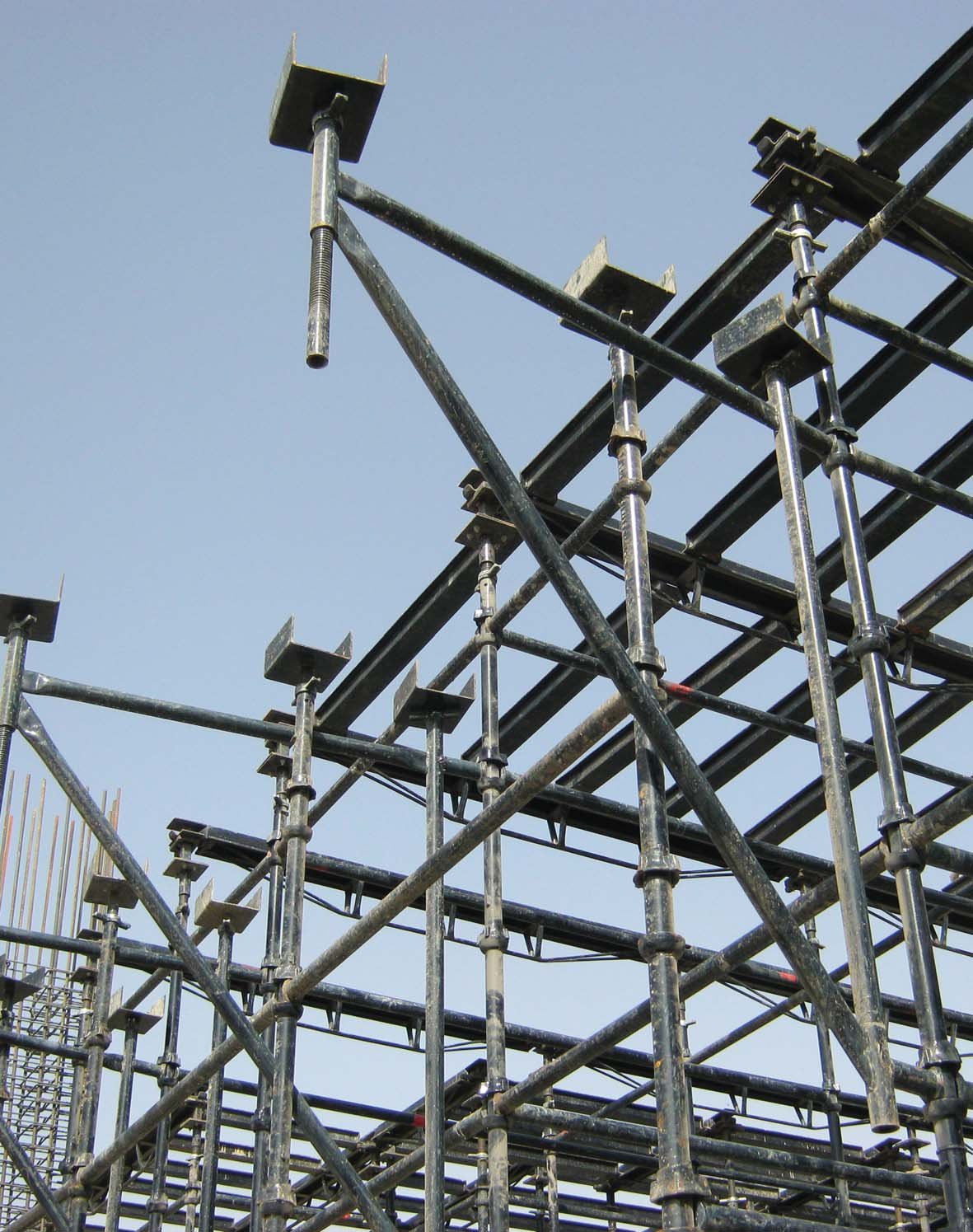
Universal jacks and diagonal bracing on a cuplock shoring scaffold

What each jack is for

A base jack sits under every cuplock standard. Its plate spreads the leg load onto the sole board or slab, and its thread takes up uneven ground so the first lift is level. A U-head jack sits on top of the standard and carries the primary formwork beam, with the sides of the U keeping the beam in place during the pour.

Both work the same way, a threaded stem and a nut, which is why extension matters: the further the thread is wound out, the less load the leg can carry. The table below shows how quickly that happens.

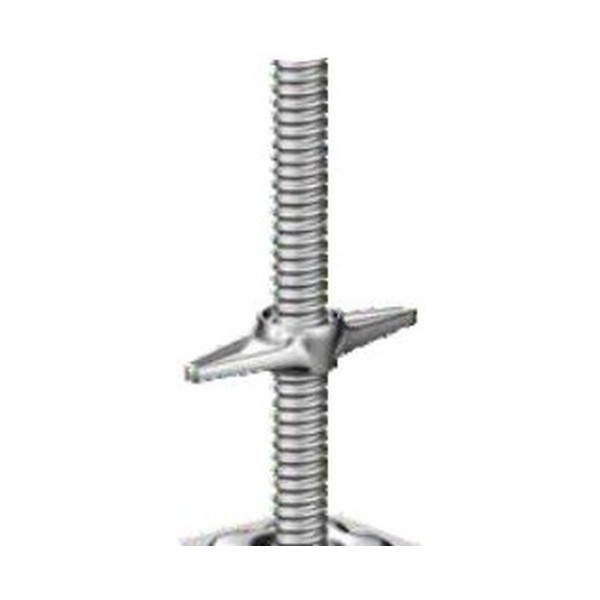
Our base jacks and U-head jacks are hollow tube, not solid rod, which keeps them lighter to handle on site. The universal jack is the solid rod type.

01

Base jack

Hollow threaded tube with a base plate. Levels the scaffold on uneven ground and transfers the load to sole boards.

02

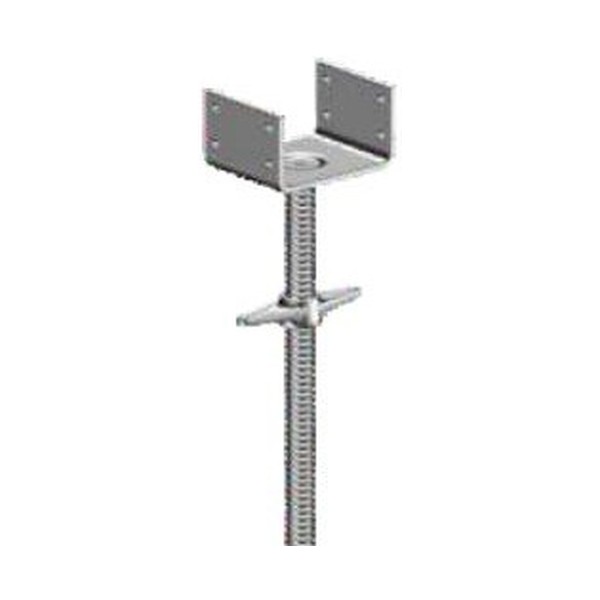
U-head jack

Hollow threaded tube with a U plate that seats the primary formwork beams. The correct head for slab support.

03

Universal jack

A screw jack usable at the base or the head with the matching plate. Not for use as a shoring U-head.

04

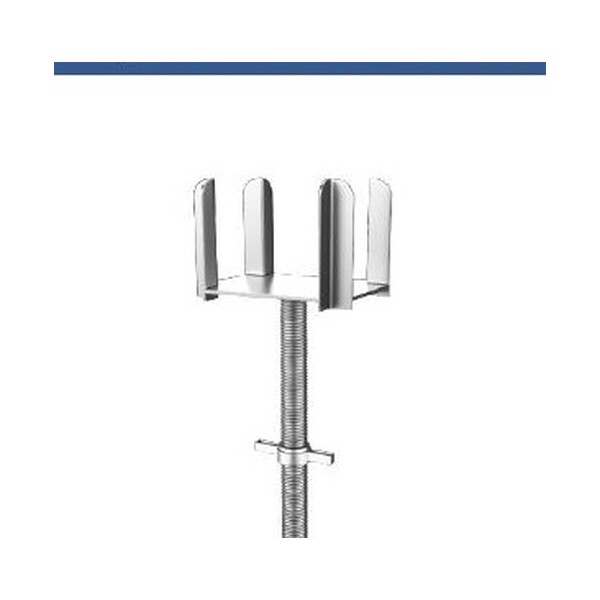
Fork head

A four-prong head that holds H20 timber or aluminum beams captive on props and standards.
Jack types and allowable load

Jacks and heads we supply
SKUItemConstructionWeightUsed for
ACC-BJBase jack, adjustableHollow threaded tube, 600 to 750 mm3.4 kgLevelling the scaffold and transferring load to sole boards
ACC-UHU-head jack, adjustableHollow threaded tube, 600 to 750 mm4.2 kgSeating primary formwork beams on shoring standards
ACC-UJUniversal jackSolid rod–Base or head use with the matching plate; not a shoring U-head
ACC-FHFork headFour-prong–Holding H20 timber or aluminum beams captive

Weights are the figures recorded in our stock system; items without a recorded weight show a dash. Every item is listed in the product catalog.

Allowable axial load against jack extension
Jack extensionAllowable axial loadShare of maximum
0 mm, fully retracted45.0 kN100%
100 mm42.0 kN93%
200 mm37.0 kN82%
300 mm31.0 kN69%
400 mm25.0 kN56%
500 mm20.0 kN44%
600 mm15.5 kN34%

Basis: a single 48.3 mm × 3.2 mm EN10219 standard with an adjustable jack, no eccentricity, a properly tied scaffold and a safety factor of 1.65 on buckling. The same values apply to base jack and U-head extension. When both ends are extended, add the two extensions and use the combined table in our base jack and U-head load tables.

Getting jacks right

Most jack problems on site come from three things: too much extension, the wrong head, or poor ground.

Extension

Keep the thread short

A leg fails by buckling, so every millimetre of extension costs capacity. The loss is not linear.

  • Keep total extension, base plus top, under 300 mm where possible
  • Above 600 mm at either end, have a competent designer check the leg
  • If demand exceeds capacity, tighten the grid or reduce extension
How jack extension affects load capacity →
Head

Use the right head

Slab support needs a U-head or fork head that holds the beam. A plain universal jack does not.

  • U-head jack: primary beams on shoring standards
  • Fork head: H20 timber or aluminum beams held captive
  • Universal jack: not a shoring U-head
Formwork beam load tables →
Ground

Check what the jack sits on

A jack at full capacity is only as good as the surface under its plate.

  • Hardened concrete slab: direct bearing is acceptable
  • Compacted sub-base: use a timber sole plate
  • Sand or granular fill: always use a sole plate
Base pad bearing guidance →
The load table is a guide for planning, not a design. The allowable load on any leg also depends on the lift height, the bracing and the ties, and must be confirmed by a competent designer for the scaffold in question. Our engineers supply the layout and load checks with every hire.

Related Components

Base Jack & U-Head FAQ

How far can a base jack be extended?+

Our base jacks and U-head jacks have a threaded tube of 600 to 750 mm, but the usable extension is set by load, not by thread length. As a rule of thumb, keep the total extension, base plus top, under 300 mm. Above 600 mm at either end, have a competent designer check the leg.

How much load can a scaffold jack carry?+

For a single 48.3 mm by 3.2 mm standard, the allowable axial load is 45 kN with the jack fully retracted, falling to 31 kN at 300 mm of extension and 15.5 kN at 600 mm, with a safety factor of 1.65. The limit is buckling of the leg, so extension reduces it quickly.

What is the difference between a U-head jack and a universal jack?+

A U-head jack carries the primary formwork beam in its U plate and is the correct head for slab support. A universal jack is a plain screw jack that works at the base or the head with the matching plate. It should not be used as a shoring U-head.

Are your base jacks and U-head jacks solid or hollow?+

Hollow. Both are made from threaded steel tube with a nut, not solid rod, which makes them lighter to handle on site. A base jack weighs about 3.4 kg and a U-head jack about 4.2 kg. The universal jack is the solid rod type.

What is a fork head used for?+

A four-prong fork head holds H20 timber or aluminum beams captive on top of props and standards, so the beam stays in place while the deck is loaded.

Price for Jacks & U-Heads

Tell us the types and quantities, and whether you want to buy or rent. You get a written quote, and a layout if you send the drawings.

Email

sales at scaffworks dot com
Factory & yard: Umm Al Quwain, United Arab Emirates

Request a Quote for Jacks