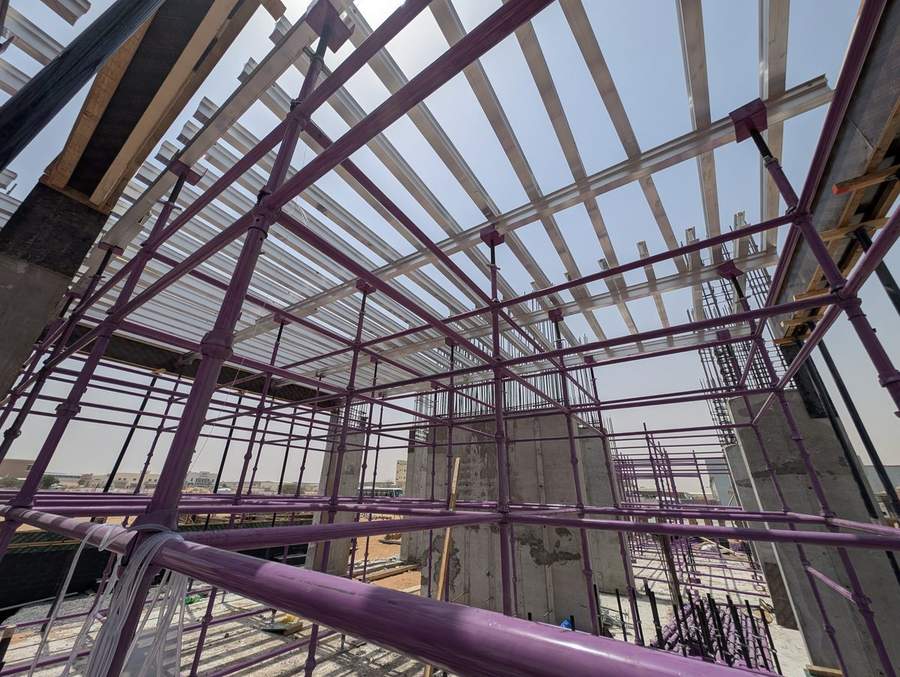
Scaffolding accidents are among the most common causes of serious injuries on UAE construction sites. Whether you're a main contractor, a scaffolding supplier, or a site engineer, understanding the safety requirements for scaffolding in the UAE is not optional — it's a legal and moral obligation. This guide covers the key regulations, inspection requirements, and practical safety measures that apply to scaffolding work in the Emirates.
UAE Scaffolding Regulations
Scaffolding safety in the UAE falls under the jurisdiction of each emirate's municipality and the Ministry of Human Resources and Emiratisation (MOHRE). The primary references are the UAE Fire and Life Safety Code of Practice, municipal building codes, and international standards that UAE authorities recognize — principally BS EN 12811 (European scaffolding standard) and OSHA guidelines adapted for the regional context.
In Dubai, the Dubai Municipality Code of Construction Safety Practice requires that all scaffolding be designed by a competent person, erected under supervision, and inspected before use. Sharjah, Ajman, and the northern emirates follow similar requirements, though enforcement varies. Abu Dhabi applies the OSHAD system (Occupational Safety and Health Abu Dhabi) which has specific scaffolding requirements under its code of practice.
Key Safety Requirements
Regardless of which emirate you're working in, these safety requirements apply to virtually all scaffolding on UAE construction sites.
All scaffolding must be erected on a stable, level base. In the UAE's sandy terrain, this often means using base plates on timber sole boards to distribute the load. Scaffolding erected directly on loose sand or uncompacted fill is a common violation and a serious risk — the standards can sink unevenly under load, causing the entire structure to collapse.
Guard rails are mandatory on all working platforms above 2 meters. This includes a top rail at 1.0m to 1.1m height, a mid rail, and a toe board at the platform edge. The number of scaffolding accidents caused by missing guard rails in the UAE is significant — it's one of the most frequently cited violations during site inspections.
Working platforms must be fully boarded with no gaps greater than 25mm. Scaffold boards should extend at least 50mm beyond their support but not more than 150mm to prevent tipping. In the UAE heat, timber scaffold boards can dry out and shrink, creating gaps that weren't there when the scaffold was first erected — regular checks are essential.
Access to scaffold platforms must be via internal ladders or stairway towers — climbing the scaffold frame itself is prohibited. Every scaffold should have a designated safe access point, and workers should be trained on proper climbing procedures.
Inspection Requirements
UAE regulations require scaffolding to be inspected by a competent person before first use, after any modification, after any event that could affect stability (such as high winds or an impact), and at regular intervals — typically weekly for scaffolding that remains erected.
A competent person for scaffolding inspection is defined as someone with sufficient training, experience, and knowledge to identify hazards and take corrective action. In practice, this should be a qualified scaffolding supervisor or engineer, not just any site worker.
Inspection results must be documented. A scaffold tag system is common practice in the UAE — green tags indicate the scaffold is safe to use, red tags indicate it is not. Any scaffold without a tag should be treated as unsafe until inspected.
Common Violations on UAE Sites
From our experience working across Dubai, Sharjah, Ajman, and the northern emirates, the most common scaffolding safety violations we see are incomplete platforms with missing boards or guard rails, scaffolding overloaded with materials beyond its design capacity, base plates not used or not set on sole boards on soft ground, modifications made without engineering approval, and untrained workers erecting or dismantling scaffolding without supervision.
Heat and Weather Considerations
The UAE's extreme summer temperatures add unique safety challenges. Metal scaffold tubes in direct sunlight can reach temperatures that cause burns on contact — workers should wear gloves when handling steel components during summer months. During the summer midday work ban (typically 12:30pm to 3:00pm from June to September), no scaffolding erection or dismantling should take place.
High winds are another concern, particularly during shamal season. Scaffolding should be tied to the building structure at regular intervals, and free-standing towers should not exceed the manufacturer's recommended height without additional bracing. Any scaffold that has been exposed to winds above 75 km/h should be re-inspected before use.
Your Responsibilities as a Contractor
If you're hiring scaffolding, your supplier should provide scaffolding that meets the relevant standards, erection by trained and competent workers, engineering drawings for complex scaffolds, and inspection records. But the responsibility for safe use on site ultimately rests with the main contractor. Make sure your workers are trained, the scaffold is not overloaded, and modifications are not made without approval.
At SCAFFWORKS, we manufacture our cuplock scaffolding from EN10219-certified steel and provide engineering support with every rental and purchase. We do not erect scaffolds ourselves: erection is carried out by your own trained scaffolders or a third-party erection contractor, working to the layout drawings and load calculations we supply with every hire.
Need Scaffolding for Your Project?
SCAFFWORKS manufactures and rents cuplock scaffolding, formwork, and shoring systems across the UAE. Factory-direct pricing.
Request a Quote WhatsApp Us