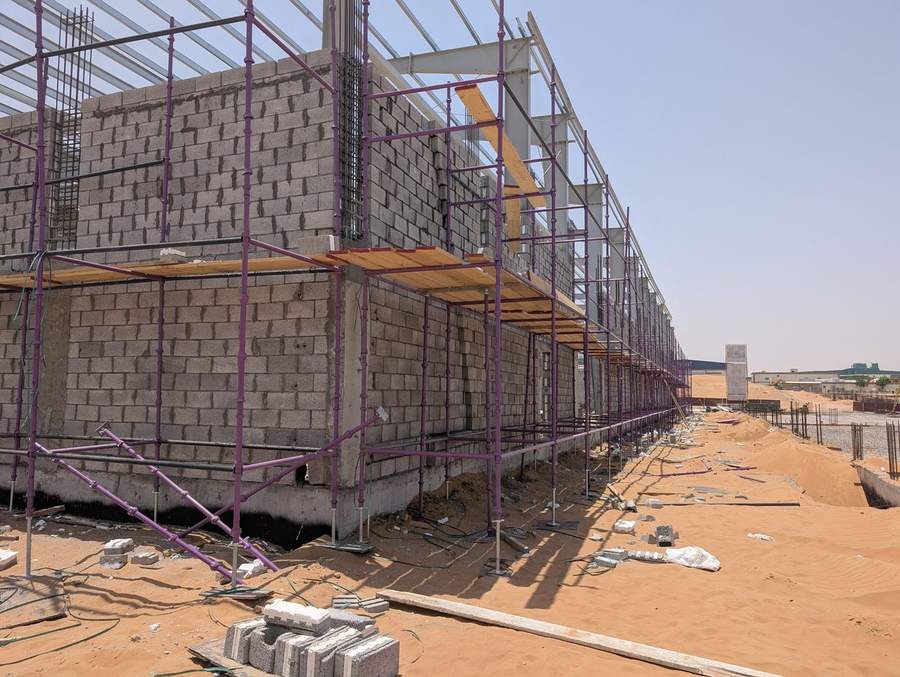
Scaffolding inspection is one of those tasks that everyone knows is important but often gets rushed or skipped under time pressure. On UAE construction sites, where scaffolding is used on virtually every project, proper inspection is the difference between a safe structure and a potential collapse. This checklist gives you a systematic approach to scaffolding inspection that covers what matters most.
When to Inspect
Scaffolding should be inspected before first use after erection, after any alteration or modification, after any event that could affect stability — high winds, vehicle impact, or heavy rain that could wash out the base, at least once every 7 days while the scaffold remains erected, and before resuming work after a period where the scaffold was unattended.
Foundation and Base Check
Start at the bottom. The foundation is where most scaffold failures begin. Check that all base plates are in place and sitting on firm, level ground or sole boards. In UAE conditions, sand and soft fill are common — look for any base plates that have sunk or tilted since erection. Sole boards should extend at least 150mm beyond the base plate on all sides. Check that the base is not undermined by water runoff, excavation nearby, or vehicle traffic close to the scaffold.
Standards (Vertical Members)
Check that all standards are plumb — leaning standards indicate foundation movement or incorrect assembly. For cuplock systems, verify that all cups are hammered down and locked. An unlocked cup means the connection between the standard and ledger is not secure. Check for damaged, bent, or heavily corroded standards. Any standard with visible damage should be replaced. Verify that standards are properly joined where extensions are used — the joint pin should be fully inserted and the joint should not be at the same level across adjacent standards.
Ledgers and Bracing
All ledgers should be in place at every level — missing ledgers compromise the scaffold's structural integrity. For cuplock systems, verify the blade ends are fully seated in the cups and the cups are locked. Check diagonal braces — they should be present according to the scaffold design drawing. Missing braces are one of the most common problems found during inspections, as workers sometimes remove them to improve access and forget to replace them.
Working Platforms
Platforms should be fully boarded with no gaps greater than 25mm. Boards should be secured against movement — in windy conditions, unsecured boards can lift. Check for damaged, cracked, or warped boards. In UAE heat, timber boards dry out and can split. Boards should overhang their support by at least 50mm but not more than 150mm.
Guard Rails and Toe Boards
Every working platform above 2m must have a top guard rail at 1.0-1.1m height, a mid rail, and a toe board at least 150mm high. Check that guard rails are secure and not just resting in place — they should be properly fixed to the standards. Toe boards prevent tools and materials from falling off the platform edge onto workers below.
Access Points
Check that all access ladders are properly secured at the top and bottom. Ladder access points should have a gate or barrier that prevents falls. Internal stairway towers should have handrails on both sides. Workers should never be climbing the scaffold frame to access platforms.
Ties and Anchors
For scaffolding erected against a building, check that ties to the structure are in place at the intervals specified in the design. Ties should not be removed or repositioned without engineering approval. For free-standing scaffolding, check that the height-to-base ratio is within the design limits and that all bracing is in place.
Loading
Check that the scaffold is not overloaded. Materials should be stored evenly across the platform, not concentrated in one area. The maximum load capacity should be displayed on the scaffold tag. Common overloading on UAE sites includes stacking too many blocks or bags of cement on a single platform.
Documentation
Record your inspection findings — date, time, inspector name, scaffold location, items checked, and any defects found. Use a traffic light tag system: green for safe to use, yellow for restrictions, red for do not use. Any scaffold tagged red must be barricaded and have its access points blocked until the defects are corrected and it's re-inspected.
At SCAFFWORKS, we provide inspection support and documentation as part of our scaffolding services. If you need a qualified inspector for your site, or if you want engineering verification of your existing scaffold, contact our team.
Need Scaffolding for Your Project?
SCAFFWORKS manufactures and rents cuplock scaffolding, formwork, and shoring systems across the UAE. Factory-direct pricing.
Request a Quote WhatsApp Us